

Odontotherapy
Cavities? We treat them before they start to hurt!
What is general dentistry?
General dentistry focuses on the diagnosis, prevention and treatment of dental caries and other conditions affecting the hard tissues of the teeth (enamel and dentin). It plays a key role in maintaining oral health and preserving a natural, aesthetic and functional smile. The main goal is to preserve the natural tooth, through minimally invasive but effective treatments.
What does general dentistry cover?
- Early and advanced detection and treatment of cavities
- Reconstruction of tooth structure using modern composite materials
- Restoration of aesthetics and functionality of affected teeth
- Treatment of superficial dental fractures
Common treatments
- Cavity fillings (aesthetic restorations)
- Composite fillings
- Durable dental reconstructions
- Treatment of non-carious lesions (abrasions, erosions, fissures)

Schedule a specialist consultation!
How can cavities be prevented?
- Proper brushing, twice a day, with fluoride toothpaste
- Daily use of dental floss
- Balanced diet with reduced sugar intake
- Proper hydration and avoiding frequent snacking
- Regular dental visits for check-ups and professional cleanings
When do you need general dentistry (odontotherapy)
- Tooth sensitivity to sweet, hot or cold
- Pain when chewing or touching a tooth
- Brown or black spots on teeth
- Fractures or sharp edges on a tooth
- Persistent bad breath
How does tooth decay progress

Enamel demineralization
(early-stage decay)
- Appears as a white or dull spot on the tooth surface
- Reversible if treated early through proper hygiene, fluoride use and reduced sugar intake
- Often painless and can go unnoticed

Superficial decay (in enamel)
- The decay begins to penetrate deeper into the enamel
- Brown or black discoloration may appear.
- Usually not painful yet, but treatment is necessary to stop progression

Medium decay (in dentin)
- The decay reaches the layer beneath enamel — dentin, which is softer and more vulnerable
- Sensitivity to sweet, hot or cold may appear
- The tooth begins to lose strength; a filling is usually needed

Deep decay (close to the nerve)
- The decay approaches the dental pulp (tooth nerve)
- Pain becomes more intense, especially to thermal stimuli or during chewing
- High risk of infection; root canal treatment may be required
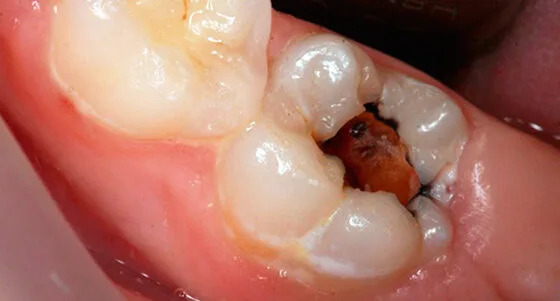
Pulp infection (pulpitis)
- Bacteria reach the nerve and cause severe inflammation
- Intense, throbbing pain may occur, often worse at night
- The main solution is root canal treatment; in advanced cases, extraction may be necessary
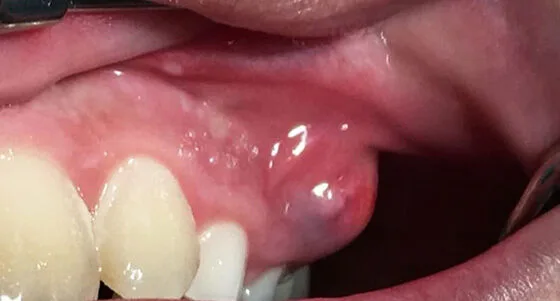
Dental abscess & bone infection
- If the pulp dies, the infection can spread to the tip of the root and into the bone
- A dental abscess may form — a collection of pus, causing pain, swelling and sometimes fever
- Requires urgent endodontic or surgical treatment, often combined with antibiotics
Treatment of dental decay
Tooth decay does not stop on its own and cannot heal without treatment.
Treatment depends on the stage at which the cavity is detected. In early or moderate stages, the procedure involves cleaning the affected area and placing a filling (dental restoration). This replaces the damaged tissue and restores the tooth’s shape, function and aesthetics. Fillings are made from modern, durable and aesthetic materials such as composite or ceramic.
In advanced cases, when the decay reaches the nerve a root canal treatment is required. This involves removing the infected pulp, cleaning and sealing the root canals. After such treatment, the tooth becomes more fragile, and a dental crown is often recommended to protect it and restore strength during chewing. This way, even severely damaged teeth can be saved and remain functional in the long term.
Benefits of general dentistry (odontotherapy)

Avoids the need for more complex treatments
(endodontics, crowns, extractions)

Supports better oral hygiene
and fresher breath
Supports better oral hygiene
and fresher breath

Prevents the progression
of decay and the onset of pain

Preserves the natural structure
of the tooth

Delivers excellent aesthetic results
, almost invisible
What our patients say about dental therapy treatments
EXCELENT Based on 2748 de recenzii
 Publicat pe Google
 Olegvlad Ursu17 Octombrie 2026Cea mai tare si recomand tuturorPublicat pe Googlecatalin Parvana17 Octombrie 2026Foarte mulțumit, am avut extracție molar, a durat 2 minute, 0 durere la procedură, 0 după. Recomand cu încredere!Publicat pe GoogleOleksandr Solovei17 Octombrie 2026Publicat pe Googledr. Daniela Cristina Nesterov17 Octombrie 2026Dr Tucan este un specialist extraordinar. Medic ortodont, Specializat in sanatatea articulatiei, profesionalismul este peste masura. Facem tratament ortodontic pentru ambii copii si scapam de sarme in gura. Comunicarea cu receptia a fost exceptionala si m-au insotit pas cu pas in tot procesul+0Publicat pe GoogleAla Cheptini17 Octombrie 2026Publicat pe GoogleAna trsk16 Octombrie 2026Clinica are o echipa de oameni seriosi, implicati si organizati care merita un succes mare.Publicat pe GoogleAndreea Blenche16 Octombrie 2026Personal profesionist si amabil, cu medici foarte specilizati/nisati, ceea ce mi-a dat un grad si mai mare de incredere. Ce mi se pare special fata de alte clinici- faptul ca exista comunicare consecventa intre medici si o continuitate intre consultatii si faptul ca personalul din receptie este de o amabilitate aparte. Voi continua sa vin aici si pentru partea ortodontica si pentru coroana post implant. Multumesc pentru atentie si profesionalism! 🩵Publicat pe GoogleTina Cercel16 Octombrie 2026Sunt foarte multumita si recomand cu drag! Doamna doctor Veronica Stirbu este foarte meticuloasa si dovedeste profesionalism.Publicat pe GoogleAndrei Pavel16 Octombrie 2026cea mai buna clinicaPublicat pe GoogleRaluca Amaritei16 Octombrie 2026Publicat pe GoogleTeodor Gaftoneanu16 Octombrie 2026O experienta placuta atmosfera primitoare medici empatici cu apropiere calda de pacienti recomand preturi accesibile pentru pacientiPublicat pe Googleioana bunoro16 Octombrie 2026


The earlier you treat it, the simpler and more affordable the treatment will be.

The earlier you treat it, the simpler and more affordable the treatment will be.
Causes of dental cavities
Frequent consumption of sugar and acidic foods
Foods high in sugar (sweets, carbonated drinks, processed snacks) feed bacteria in the mouth, which produce acids that erode enamel. Acidic foods (such as citrus, fruit juices, vinegar) can also weaken tooth structure.
Poor oral hygiene
The most common cause. If you don’t brush at least twice a day and use dental floss or a water flosser, food debris remains on teeth, feeding bacteria that produce acids and lead to cavities.
Tooth structure and alignment
Crowded or misaligned teeth can trap food more easily, making them harder to clean. This increases the risk of cavities, especially on chewing surfaces and between teeth.
Unhealthy eating habits
Frequent snacking and sipping sugary drinks throughout the day expose teeth constantly to acids, without giving them time to recover.
Lack of regular dental visits
Many cavities develop silently — without pain or visible signs. Regular check-ups (every 6 months) help detect and treat them early.
Genetic factors
Some people may have weaker enamel or different saliva composition, making them more prone to cavities, even with good oral hygiene.
General dentistry (odontotherapy) prices
Dental filling
500 RON
98,04 euro
Professional cleaning (scaling & polishing)
450 RON
88,24 euro
Crown reconstruction (composite build-up)
350 RON / dinte
68,63 euro / dinte
Wall reconstruction for endodontic purposes
250 RON / tooth
49,02 euro / tooth
Frequently Asked Questions
A dental filling is a restoration used to fill the space left by a cavity, rebuilt with a durable and aesthetic composite material.
On average, a filling lasts between 5 and 10 years, depending on oral hygiene, the material used and the position of the tooth.
No. A filling is usually completed in a single session of 30–60 minutes.
In some cases, it may not be necessary, but usually a light local anesthesia is used to ensure maximum comfort.
When? How? Where?


- Pricing information
- Guidance to the right specialist
- Directions to the clinic
- Appointment scheduling
- Post-treatment support
- General treatment information